Rigging
The rig holds the mast up. When it fails, it tends to fail all at once. Having someone who knows what to look for go over it costs far less than a dismasting.
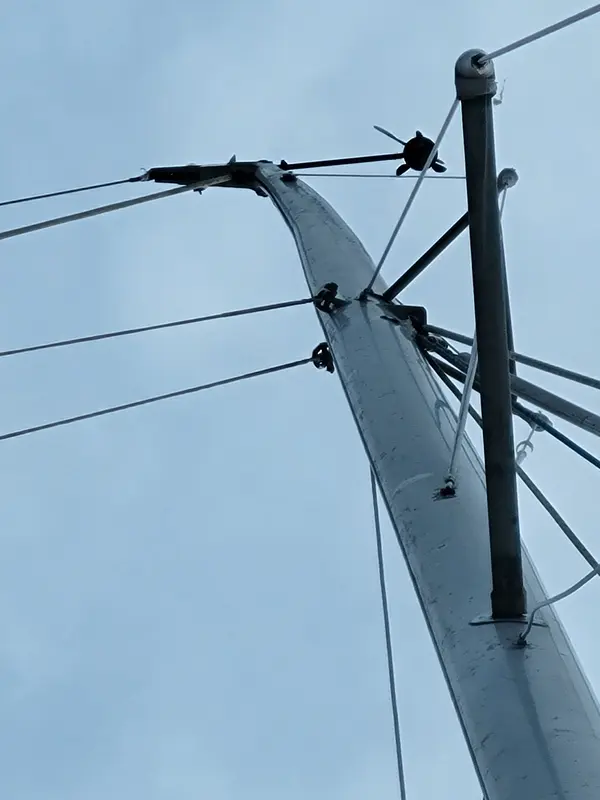
Wire, terminals, pins and chainplates age quietly. Cracks start where you cannot see them from the deck, and rust stains are often the only warning.
Simon goes over the rig from the deck to the masthead, tells you what he finds in plain words, and replaces what needs replacing. A well tuned rig also sails better, points higher and is easier on the boat.
What is included
- A rig inspection from deck to masthead
- Standing rigging: wire, swages, turnbuckles, spreaders and chainplates
- Running rigging: halyards, sheets, blocks and clutches
- Tuning so the mast stands straight and the boat sails the way she should
- Replacement of worn wire, rope and fittings
What Simon needs from you
- Make, model and year of the boat
- How old the standing rigging is, if you know
- Whether the mast is up or down
- Anything you have noticed: noises, slack shrouds, rust stains, a mast that bends when it should not
Questions
How often should rigging be checked?
At least once a year, and again after a hard grounding, a knockdown or a collision.
How long does wire rigging last?
It depends on how hard the boat is sailed and where she lives. Your insurer may set its own limit. An inspection tells you where yours stands.
Does the mast have to come down?
Most inspection and running rigging work can be done with the mast up. Replacing standing rigging is often easier with it down, which is why autumn haul-out is a good time.

Tell Simon about your boat.
What she is, where she is, and what she needs. He will get back to you.